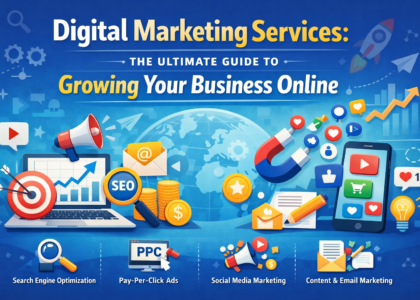
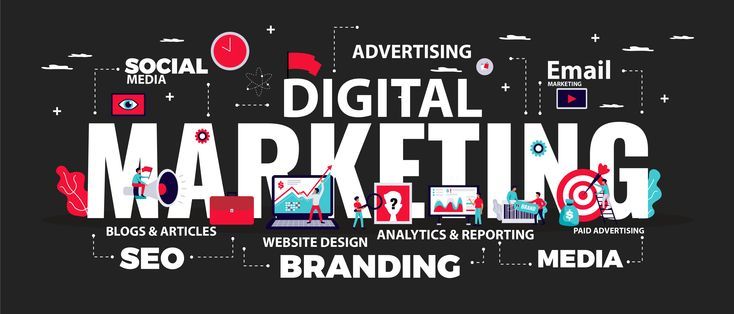
At its core, digital marketing is any form of marketing that exists on electronic devices and involves the internet. This includes marketing on websites, search engines, blogs, social media, email, and mobile apps. Unlike traditional marketing (like billboards or print ads), digital marketing uses digital channels to connect with current and prospective customers.
Think of it this way: when you search for “best coffee maker” on Google and click on a review article, that’s digital marketing. When you see an ad for sneakers on Instagram and tap “Shop Now,” that’s digital marketing. When you receive an email from your favorite clothing brand with a discount code, that’s also digital marketing.
The goal is always the same: to attract, engage, and convert potential customers. However, the methods are constantly evolving with new technologies and platforms.
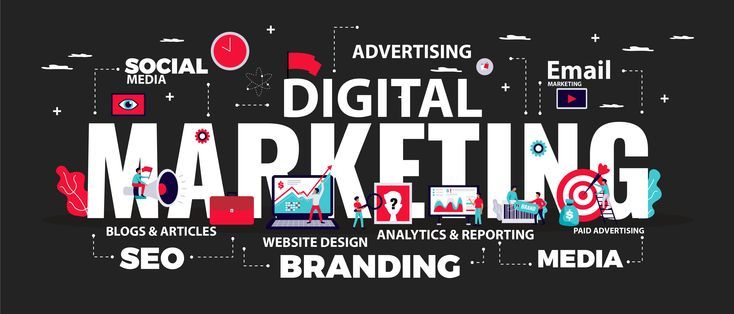
THE CORE COMPONENTS OF DIGITAL MARKETING
Digital marketing is a broad field with many specialized areas. A successful strategy usually combines several of these core components:
| Channel | Primary Purpose | Key Platforms/Tools |
| Search Engine Optimization (SEO) | Increase organic (free) visibility in search results to drive long-term traffic. | Google, Bing, YouTube, SEMrush, Ahrefs |
| Social Media Marketing | Build brand awareness, engage with communities, and provide customer service. | Facebook, Instagram, LinkedIn, TikTok, X (Twitter) |
| Content Marketing | Establish authority, solve customer problems, and attract leads through valuable content. | Blogs, Videos, Infographics, Podcasts, E-books |
| Email Marketing | Retain customers, nurture leads, and drive repeat sales through direct communication. | Mailchimp, SendPulse, HubSpot, ConvertKit |
| Pay-Per-Click (PPC) Advertising | Get immediate traffic and test new markets by paying for ad placements. | Google Ads, Facebook Ads, LinkedIn Ads, TikTok Ads |
| Affiliate Marketing | Expand reach by paying commissions to others (affiliates) who promote your products. | Amazon Associates, ShareASale, CJ Affiliate |
| Influencer Marketing | Build trust by partnering with influential people who have dedicated, engaged audiences. | Platform-specific creators, bloggers, YouTubers |
Search Engine Optimization (SEO): This is the process of optimizing your website and content so it appears higher in search engine results pages (SERPs) for relevant keywords. It’s about making your site easy for search engines to understand and valuable for users to visit.
Social Media Marketing: This involves using social platforms to promote your brand, share content, and interact with your audience. It’s a powerful way to build a community around your brand.
Content Marketing: This focuses on creating and distributing valuable, relevant, and consistent content to attract and retain a clearly defined audience. The goal is to drive profitable customer action, not just to sell.
Email Marketing: Despite being one of the oldest digital channels, email marketing remains incredibly effective. It allows for direct, personalized communication with people who have already shown interest in your brand.
Pay-Per-Click (PPC) Advertising: With PPC, you pay a fee each time someone clicks on your ad. It’s a way to buy visits to your site, rather than earning them organically. Google Ads is the most common platform.
Affiliate Marketing: This is a performance-based marketing strategy where you pay external partners (affiliates) a commission for the traffic or sales they generate for your business.
Influencer Marketing: This involves partnering with social media influencers to promote your products or services to their followers. It leverages the trust and authority the influencer has built.
HOW DOES DIGITAL MARKETING WORK? THE PUSH VS. PULL CONCEPT
To understand digital marketing, it helps to think of it in two main categories: Pull and Push. Most successful strategies use a mix of both.
PULL MARKETING
In pull marketing, the user actively seeks out your content. They have a problem, a question, or a need, and they’re looking for a solution.
Examples: A person Googles “how to fix a leaky faucet” and finds your plumbing company’s blog post. Someone searches for “best running shoes for women” on YouTube and watches your review video.
Key Channels: SEO and Content Marketing are the primary pull strategies.
Advantage: The user is already interested and has high intent. They are more likely to trust you because they found you organically.
Challenge: It takes time and effort to build visibility so that users can find you.
PUSH MARKETING
In push marketing, the marker sends the message directly to the potential customer. The user may not have been looking for you, but your message appears in their path.
Examples: You see a banner ad for a vacation package while reading a news article. You receive a promotional email from a store you signed up for. An ad for a new game appears in your Instagram feed.
Key Channels: PPC, Social Media Advertising, and Email Marketing are classic push strategies.
Advantage: It provides immediate visibility and allows for precise targeting based on demographics, interests, and online behavior.
Challenge: It can be more expensive, and users may see it as intrusive if not done well.
WHAT IS EEAT AND WHY DOES IT MATTER IN 2026?
If you want your digital marketing (especially your SEO and content) to succeed, you absolutely must understand EEAT. This is not just a buzzword; it’s the framework Google uses to assess the quality of web content. It stands for:
- Experience
- Expertise
- Authoritativeness
- Trustworthiness
EEAT is part of Google’s Search Quality Rater Guidelines—a 170+ page document that human reviewers use to evaluate the quality of search results. While these ratings don’t directly impact rankings, they give Google a blueprint for what its algorithm should aim for. In short, Google wants to reward content that demonstrates high levels of EEAT.
EXPERIENCE
Does the content creator have first-hand or life experience with the topic? This is about showing you’ve actually “been there, done that.”
Example: A review of a hotel is better if written by someone who actually stayed there. A recipe is more trustworthy if it comes from a home cook who tested it, not just a writer who compiled ingredients. A product review video is more valuable if the reviewer actually uses the product.
EXPERTISE
Does the content creator have deep knowledge or skills in a particular area? This is about formal or informal qualifications.
Example: Medical advice should come from a doctor or a medical professional. Financial advice should come from a financial advisor. A guide on coding is better if written by an experienced software developer.
AUTHORITATIVENESS
Is the content creator, the content itself, and the website considered a go-to source in its field? This is about reputation.
Example: A well-known tech blog like TechCrunch has authority in the tech world. A website that is frequently linked to by other reputable websites (backlinks) is seen as more authoritative. Is your brand recognized as a leader in your niche?
TRUSTWORTHINESS
This is the most important part of EEAT. Is the website and its content accurate, honest, secure, and reliable?
Example: Does the site use HTTPS (the secure padlock in the address bar)? Does it have a clear privacy policy and contact information? Are customer reviews authentic? Does the content present factual information without trying to deceive the user? Trustworthiness is the foundation upon which the other three E’s are built.
HOW TO APPLY EEAT TO YOUR DIGITAL MARKETING STRATEGY
Knowing what EEAT is one thing; implementing it is another. Here are practical ways to build EEAT into your digital marketing:
1. Create Detailed Author Bios
Don’t hide who writes your content. For every blog post or article, include an author byline with a link to a detailed bio page. On that page, explain the author’s credentials, experience, and links to their other work or social profiles. This demonstrates Experience and Expertise.
2. Cite Reputable Sources
When you make claims or share data, link out to high-quality, authoritative sources (like official studies, government websites, or well-respected publications). This shows you’ve done your research and builds Trustworthiness. Also, aim to get other authoritative sites to link back to your content (backlinks), which builds Authoritativeness.
3. Showcase Authentic Reviews and Testimonials
Display genuine customer reviews with real names and photos (with permission). This is powerful social proof that builds Trust. Respond to both positive and negative reviews professionally, showing you value customer feedback.
4. Create Content Based on Real Experience
Go beyond theoretical knowledge. Write “how-to” guides, create tutorial videos, and share case studies based on your own work. If you sell a product, create content showing people how to use it in real-life situations. This directly addresses the Experience factor.
5. Build a Secure and Transparent Website
This is non-negotiable for Trustworthiness.
- Ensure your site uses HTTPS
- Have a clear and accessible Privacy Policy and Terms of Service
- Display your contact information (email, phone, physical address) prominently
- Make your return/refund policy easy to find and understand
6. Focus on Quality Backlink
How Does Digital Marketing Work? The Push vs. Pull Concept
To understand digital marketing, it helps to think of it in two main categories: Pull and Push. Most successful strategies use a mix of both.
Pull Marketing
In pull marketing, the user actively seeks out your content. They have a problem, a question, or a need, and they’re looking for a solution.
- Examples: A person Googles “how to fix a leaky faucet” and finds your plumbing company’s blog post. Someone searches for “best running shoes for women” on YouTube and watches your review video.
- Key Channels: SEO and Content Marketing are the primary pull strategies.
- Advantage: The user is already interested and has high intent. They are more likely to trust you because they found you organically.
- Challenge: It takes time and effort to build visibility so that users can find you.
Push Marketing
In push marketing, the marketer sends the message directly to the potential customer. The user may not have been looking for you, but your message appears in their path.
- Examples: You see a banner ad for a vacation package while reading a news article. You receive a promotional email from a store you signed up for. An ad for a new game appears in your Instagram feed.
- Key Channels: PPC, Social Media Advertising, and Email Marketing are classic push strategies.
- Advantage: It provides immediate visibility and allows for precise targeting based on demographics, interests, and online behavior.
- Challenge: It can be more expensive, and users may see it as intrusive if not done well.
Digital Marketing vs. Traditional Marketing: Key Differences
What makes digital marketing so special? Here are the key features that set it apart from traditional marketing (like TV, radio, and print ads):
1. Cheaper and Faster A/B Testing
In traditional marketing, testing two different versions of a billboard or a TV commercial is incredibly expensive and time-consuming. In digital marketing, you can run an A/B test in minutes. You can show two different headlines for a Facebook ad to two small groups, see which one gets more clicks, and then run the winning version to the rest of your audience. This data-driven optimization is a game-changer.
2. Easier to Track ROI (Return on Investment)
The famous quote, “I know half my advertising is wasted, but I don’t know which half,” is largely outdated in the digital world. Digital tools allow you to track the entire customer journey. You can see exactly how many people saw your ad, how many clicked on it, how many made a purchase, and exactly how much revenue that campaign generated. This makes it much easier to calculate your true ROI.
3. Ability to Reach Niche Audiences
Digital marketing allows for incredible precision. You can target your ads to reach only left-handed people in Chicago who are interested in gardening and have visited your website in the last week. This level of granularity is impossible with traditional media, which broadcasts a message to a broad, mostly untargeted audience.
4. Opportunities to Deeply Understand the Customer
Digital marketing is data-driven. Every click, view, like, share, and purchase generates data. By using analytics tools (like Google Analytics), you can build detailed profiles of your customers. You can understand their demographics, interests, online behavior, and what content they engage with. This allows you to continuously refine your marketing to better serve them.
What is EEAT and Why Does It Matter in 2026?
If you want your digital marketing (especially your SEO and content) to succeed, you absolutely must understand EEAT. This is not just a buzzword; it’s the framework Google uses to assess the quality of web content. It stands for:
- Experience
- Expertise
- Authoritativeness
- Trustworthiness
EEAT is part of Google’s Search Quality Rater Guidelines—a 170+ page document that human reviewers use to evaluate the quality of search results. While these ratings don’t directly impact rankings, they give Google a blueprint for what its algorithm should aim for. In short, Google wants to reward content that demonstrates high levels of EEAT.
Let’s break down each component:
1. Experience
Does the content creator have first-hand or life experience with the topic? This is about showing you’ve actually “been there, done that.”
- Example: A review of a hotel is better if written by someone who actually stayed there. A recipe is more trustworthy if it comes from a home cook who tested it, not just a writer who compiled ingredients. A product review video is more valuable if the reviewer actually uses the product.
2. Expertise
Does the content creator have deep knowledge or skills in a particular area? This is about formal or informal qualifications.
- Example: Medical advice should come from a doctor or a medical professional (expertise). Financial advice should come from a financial advisor. A guide on coding is better if written by an experienced software developer.
3. Authoritativeness
Is the content creator, the content itself, and the website considered a go-to source in its field? This is about reputation.
- Example: A well-known tech blog like TechCrunch has authority in the tech world. A website that is frequently linked to by other reputable websites (backlinks) is seen as more authoritative. Is your brand recognized as a leader in your niche?
4. Trustworthiness
This is the most important part of EEAT. Is the website and its content accurate, honest, secure, and reliable?
- Example: Does the site use HTTPS (the secure padlock in the address bar)? Does it have a clear privacy policy and contact information? Are customer reviews authentic? Does the content present factual information without trying to deceive the user? Trustworthiness is the foundation upon which the other three E’s are built.
How to Apply EEAT to Your Digital Marketing Strategy
Knowing what EEAT is one thing; implementing it is another. Here are practical ways to build EEAT into your digital marketing:
1. Create Detailed Author Bios
Don’t hide who writes your content. For every blog post or article, include an author byline with a link to a detailed bio page. On that page, explain the author’s credentials, experience, and links to their other work or social profiles. This demonstrates Experience and Expertise.
2. Cite Reputable Sources
When you make claims or share data, link out to high-quality, authoritative sources (like official studies, government websites, or well-respected publications). This shows you’ve done your research and builds Trustworthiness. Also, aim to get other authoritative sites to link back to your content (backlinks), which builds Authoritativeness.
3. Showcase Authentic Reviews and Testimonials
Display genuine customer reviews with real names and photos (with permission). This is powerful social proof that builds Trust. Respond to both positive and negative reviews professionally, showing you value customer feedback.
4. Create Content Based on Real Experience
Go beyond theoretical knowledge. Write “how-to” guides, create tutorial videos, and share case studies based on your own work. If you sell a product, create content showing people how to use it in real-life situations. This directly addresses the Experience factor.
5. Build a Secure and Transparent Website
This is non-negotiable for Trustworthiness.
- Ensure your site uses HTTPS.
- Have a clear and accessible Privacy Policy and Terms of Service.
- Display your contact information (email, phone, physical address) prominently.
- Make your return/refund policy easy to find and understand.
6. Focus on Quality Backlinks
Don’t waste time on low-quality link schemes. Focus on creating exceptional content that other websites will want to link to naturally. This is the best way to build Authoritativeness. You can also do guest posting on reputable sites in your industry.At its core, digital marketing is any form of marketing that exists on electronic devices and involves the internet. This includes marketing on websites, search engines, blogs, social media, email, and mobile apps. Unlike traditional marketing (like billboards or print ads), digital marketing uses digital channels to connect with current and prospective customers.
Think of it this way: when you search for “best coffee maker” on Google and click on a review article, that’s digital marketing. When you see an ad for sneakers on Instagram and tap “Shop Now,” that’s digital marketing. When you receive an email from your favorite clothing brand with a discount code, that’s also digital marketing.
The goal is always the same: to attract, engage, and convert potential customers. However, the methods are constantly evolving with new technologies and platforms.
HOW DOES DIGITAL MARKETING WORK? THE PUSH VS. PULL CONCEPT
To understand digital marketing, it helps to think of it in two main categories: Pull and Push. Most successful strategies use a mix of both.
PULL MARKETING
In pull marketing, the user actively seeks out your content. They have a problem, a question, or a need, and they’re looking for a solution.
Examples: A person Googles “how to fix a leaky faucet” and finds your plumbing company’s blog post. Someone searches for “best running shoes for women” on YouTube and watches your review video.
Key Channels: SEO and Content Marketing are the primary pull strategies.
Advantage: The user is already interested and has high intent. They are more likely to trust you because they found you organically.
Challenge: It takes time and effort to build visibility so that users can find you.
PUSH MARKETING
In push marketing, the marker sends the message directly to the potential customer. The user may not have been looking for you, but your message appears in their path.
Examples: You see a banner ad for a vacation package while reading a news article. You receive a promotional email from a store you signed up for. An ad for a new game appears in your Instagram feed.
Key Channels: PPC, Social Media Advertising, and Email Marketing are classic push strategies.
Advantage: It provides immediate visibility and allows for precise targeting based on demographics, interests, and online behavior.
Challenge: It can be more expensive, and users may see it as intrusive if not done well.
DIGITAL MARKETING VS. TRADITIONAL MARKETING: KEY DIFFERENCES
What makes digital marketing so special? Here are the key features that set it apart from traditional marketing (like TV, radio, and print ads):
1. Cheaper and Faster A/B Testing
In traditional marketing, testing two different versions of a billboard or a TV commercial is incredibly expensive and time-consuming. In digital marketing, you can run an A/B test in minutes. You can show two different headlines for a Facebook ad to two small groups, see which one gets more clicks, and then run the winning version to the rest of your audience. This data-driven optimization is a game-changer.
2. Easier to Track ROI
The famous quote, “I know half my advertising is wasted, but I don’t know which half,” is largely outdated in the digital world. Digital tools allow you to track the entire customer journey. You can see exactly how many people saw your ad, how many clicked on it, how many made a purchase, and exactly how much revenue that campaign generated. This makes it much easier to calculate your true ROI.
3. Ability to Reach Niche Audiences
Digital marketing allows for incredible precision. You can target your ads to reach only left-handed people in Chicago who are interested in gardening and have visited your website in the last week. This level of granularity is impossible with traditional media, which broadcasts a message to a broad, mostly untargeted audience.
4. Opportunities to Deeply Understand the Customer
Digital marketing is data-driven. Every click, view, like, share, and purchase generates data. By using analytics tools (like Google Analytics), you can build detailed profiles of your customers. You can understand their demographics, interests, online behavior, and what content they engage with. This allows you to continuously refine your marketing to better serve them.
If you want your digital marketing (especially your SEO and content) to succeed, you absolutely must understand EEAT. This is not just a buzzword; it’s the framework Google uses to assess the quality of web content. It stands for:
- Experience
- Expertise
- Authoritativeness
- Trustworthiness
EEAT is part of Google’s Search Quality Rater Guidelines—a 170+ page document that human reviewers use to evaluate the quality of search results. While these ratings don’t directly impact rankings, they give Google a blueprint for what its algorithm should aim for. In short, Google wants to reward content that demonstrates high levels of EEAT.
EXPERIENCE
Does the content creator have first-hand or life experience with the topic? This is about showing you’ve actually “been there, done that.”
Example: A review of a hotel is better if written by someone who actually stayed there. A recipe is more trustworthy if it comes from a home cook who tested it, not just a writer who compiled ingredients. A product review video is more valuable if the reviewer actually uses the product.
EXPERTISE
Does the content creator have deep knowledge or skills in a particular area? This is about formal or informal qualifications.
Example: Medical advice should come from a doctor or a medical professional. Financial advice should come from a financial advisor. A guide on coding is better if written by an experienced software developer.
AUTHORITATIVENESS
Is the content creator, the content itself, and the website considered a go-to source in its field? This is about reputation.
Example: A well-known tech blog like TechCrunch has authority in the tech world. A website that is frequently linked to by other reputable websites (backlinks) is seen as more authoritative. Is your brand recognized as a leader in your niche?
TRUSTWORTHINESS
HOW TO APPLY EEAT TO YOUR DIGITAL MARKETING STRATEGY
Knowing what EEAT is one thing; implementing it is another. Here are practical ways to build EEAT into your digital marketing:
1. Create Detailed Author Bios
Don’t hide who writes your content. For every blog post or article, include an author byline with a link to a detailed bio page. On that page, explain the author’s credentials, experience, and links to their other work or social profiles. This demonstrates Experience and Expertise.
2. Cite Reputable Sources
When you make claims or share data, link out to high-quality, authoritative sources (like official studies, government websites, or well-respected publications). This shows you’ve done your research and builds Trustworthiness. Also, aim to get other authoritative sites to link back to your content (backlinks), which builds Authoritativeness.
3. Showcase Authentic Reviews and Testimonials
Display genuine customer reviews with real names and photos (with permission). This is powerful social proof that builds Trust. Respond to both positive and negative reviews professionally, showing you value customer feedback.
4. Create Content Based on Real Experience
Go beyond theoretical knowledge. Write “how-to” guides, create tutorial videos, and share case studies based on your own work. If you sell a product, create content showing people how to use it in real-life situations. This directly addresses the Experience factor.
5. Build a Secure and Transparent Website
This is non-negotiable for Trustworthiness.
- Ensure your site uses HTTPS
- Have a clear and accessible Privacy Policy and Terms of Service
- Display your contact information (email, phone, physical address) prominently
- Make your return/refund policy easy to find and understand
6. Focus on Quality Backlinks
Don’t waste time on low-quality link schemes. Focus on creating exceptional content that other websites will want to link to naturally. This is the best way to build Authoritativeness. You can also do guest posting on reputable sites in your industry.
How Does Digital Marketing Work? The Push vs. Pull Concept
To understand digital marketing, it helps to think of it in two main categories: Pull and Push. Most successful strategies use a mix of both.
Pull Marketing
In pull marketing, the user actively seeks out your content. They have a problem, a question, or a need, and they’re looking for a solution.
- Examples: A person Googles “how to fix a leaky faucet” and finds your plumbing company’s blog post. Someone searches for “best running shoes for women” on YouTube and watches your review video.
- Key Channels: SEO and Content Marketing are the primary pull strategies.
- Advantage: The user is already interested and has high intent. They are more likely to trust you because they found you organically.
- Challenge: It takes time and effort to build visibility so that users can find you.
Push Marketing
In push marketing, the marketer sends the message directly to the potential customer. The user may not have been looking for you, but your message appears in their path.
- Examples: You see a banner ad for a vacation package while reading a news article. You receive a promotional email from a store you signed up for. An ad for a new game appears in your Instagram feed.
- Key Channels: PPC, Social Media Advertising, and Email Marketing are classic push strategies.
- Advantage: It provides immediate visibility and allows for precise targeting based on demographics, interests, and online behavior.
- Challenge: It can be more expensive, and users may see it as intrusive if not done well.
Digital Marketing vs. Traditional Marketing: Key Differences
What makes digital marketing so special? Here are the key features that set it apart from traditional marketing (like TV, radio, and print ads):
1. Cheaper and Faster A/B Testing
In traditional marketing, testing two different versions of a billboard or a TV commercial is incredibly expensive and time-consuming. In digital marketing, you can run an A/B test in minutes. You can show two different headlines for a Facebook ad to two small groups, see which one gets more clicks, and then run the winning version to the rest of your audience. This data-driven optimization is a game-changer.
2. Easier to Track ROI (Return on Investment)
The famous quote, “I know half my advertising is wasted, but I don’t know which half,” is largely outdated in the digital world. Digital tools allow you to track the entire customer journey. You can see exactly how many people saw your ad, how many clicked on it, how many made a purchase, and exactly how much revenue that campaign generated. This makes it much easier to calculate your true ROI.
3. Ability to Reach Niche Audiences
Digital marketing allows for incredible precision. You can target your ads to reach only left-handed people in Chicago who are interested in gardening and have visited your website in the last week. This level of granularity is impossible with traditional media, which broadcasts a message to a broad, mostly untargeted audience.
4. Opportunities to Deeply Understand the Customer
Digital marketing is data-driven. Every click, view, like, share, and purchase generates data. By using analytics tools (like Google Analytics), you can build detailed profiles of your customers. You can understand their demographics, interests, online behavior, and what content they engage with. This allows you to continuously refine your marketing to better serve them.
What is EEAT and Why Does It Matter in 2026?
If you want your digital marketing (especially your SEO and content) to succeed, you absolutely must understand EEAT. This is not just a buzzword; it’s the framework Google uses to assess the quality of web content. It stands for:
- Experience
- Expertise
- Authoritativeness
- Trustworthiness
EEAT is part of Google’s Search Quality Rater Guidelines—a 170+ page document that human reviewers use to evaluate the quality of search results. While these ratings don’t directly impact rankings, they give Google a blueprint for what its algorithm should aim for. In short, Google wants to reward content that demonstrates high levels of EEAT.
Let’s break down each component:
1. Experience
Does the content creator have first-hand or life experience with the topic? This is about showing you’ve actually “been there, done that.”
- Example: A review of a hotel is better if written by someone who actually stayed there. A recipe is more trustworthy if it comes from a home cook who tested it, not just a writer who compiled ingredients. A product review video is more valuable if the reviewer actually uses the product.
2. Expertise
Does the content creator have deep knowledge or skills in a particular area? This is about formal or informal qualifications.
- Example: Medical advice should come from a doctor or a medical professional (expertise). Financial advice should come from a financial advisor. A guide on coding is better if written by an experienced software developer.
3. Authoritativeness
Is the content creator, the content itself, and the website considered a go-to source in its field? This is about reputation.
- Example: A well-known tech blog like TechCrunch has authority in the tech world. A website that is frequently linked to by other reputable websites (backlinks) is seen as more authoritative. Is your brand recognized as a leader in your niche?
4. Trustworthiness
This is the most important part of EEAT. Is the website and its content accurate, honest, secure, and reliable?
- Example: Does the site use HTTPS (the secure padlock in the address bar)? Does it have a clear privacy policy and contact information? Are customer reviews authentic? Does the content present factual information without trying to deceive the user? Trustworthiness is the foundation upon which the other three E’s are built.
How to Apply EEAT to Your Digital Marketing Strategy
Knowing what EEAT is one thing; implementing it is another. Here are practical ways to build EEAT into your digital marketing:
1. Create Detailed Author Bios
Don’t hide who writes your content. For every blog post or article, include an author byline with a link to a detailed bio page. On that page, explain the author’s credentials, experience, and links to their other work or social profiles. This demonstrates Experience and Expertise.
2. Cite Reputable Sources
When you make claims or share data, link out to high-quality, authoritative sources (like official studies, government websites, or well-respected publications). This shows you’ve done your research and builds Trustworthiness. Also, aim to get other authoritative sites to link back to your content (backlinks), which builds Authoritativeness.
3. Showcase Authentic Reviews and Testimonials
Display genuine customer reviews with real names and photos (with permission). This is powerful social proof that builds Trust. Respond to both positive and negative reviews professionally, showing you value customer feedback.
4. Create Content Based on Real Experience
Go beyond theoretical knowledge. Write “how-to” guides, create tutorial videos, and share case studies based on your own work. If you sell a product, create content showing people how to use it in real-life situations. This directly addresses the Experience factor.
5. Build a Secure and Transparent Website
This is non-negotiable for Trustworthiness.
- Ensure your site uses HTTPS.
- Have a clear and accessible Privacy Policy and Terms of Service.
- Display your contact information (email, phone, physical address) prominently.
- Make your return/refund policy easy to find and understand.
6. Focus on Quality Backlinks
Don’t waste time on low-quality link schemes. Focus on creating exceptional content that other websites will want to link to naturally. This is the best way to build Authoritativeness. You can also do guest posting on reputable sites in your industry.